
Cost guide
How much does it cost to build a custom home in Utah County?
Published August 21, 2026
A custom home is the one big purchase where almost nobody knows the price before they start. Here is how the number actually gets built in Utah County, what moves it up and down, and why the cheapest bid is almost never the cheapest house.
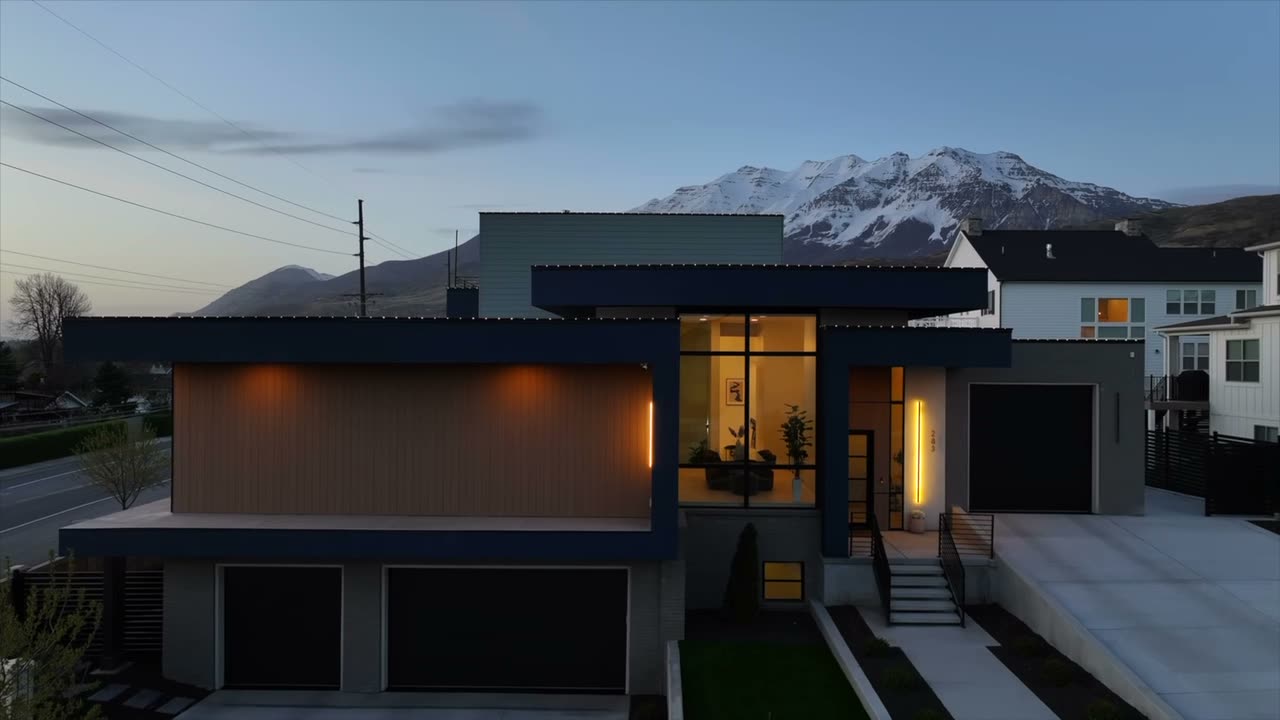
Why there is no sticker price
A custom home is priced from three things: your plans, your lot, and your finishes. Change any one and the number moves. That is the whole difference between a custom home and a production home. A production builder sells the same house many times, so the cost is known cold. With a custom home, you are the first person ever to build that exact house on that exact piece of ground. So the honest first answer to "what does it cost" is a question back: on which lot, at what size, and finished to what level.
The per-square-foot number, and how to read it
People want one number, so here is the honest version of one. In Utah County, custom homes commonly run somewhere from about $250 to $500 per finished square foot, and high-end homes on hard lots go well past the top of that. Treat that as a wide market range, not a quote. It moves with the price of lumber and labor, and it swings hard on the two things below.
Real life is not "cost per foot times square feet," either. The expensive rooms, like kitchens and bathrooms, and the expensive systems do not spread evenly across the floor plan. The only number that means anything for your house is a written estimate built from your actual plans. Anyone who gives you a firm price over the phone, before seeing a drawing, is guessing.
The two things that move the number most
The lot. Flat, serviced land in a subdivision is the cheap end. A view lot on a slope is not, because the expensive part of a hillside home is under the house: excavation, retaining walls, an engineered foundation, longer utility runs, and drainage. In cities like Alpine, the ground even has to pass a soil and rock study before you are allowed to build on part of it. If you are looking at a sloped lot, read our guide to building on a hillside lot in Utah County before you buy one.
The finishes. Two identical floor plans can end up $200,000 apart, entirely on choices you make inside: cabinets, countertops, tile, windows, flooring, and trim. This is where budgets quietly break, and it is the reason for the next section.
Allowances: the line that breaks most budgets
This is the single most useful thing to understand before you sign anything. A bid usually contains allowances. An allowance is a placeholder dollar figure for something you have not picked yet, like tile, cabinets, lighting, or plumbing fixtures. The bid total is the price if those placeholders hold. They often do not, because a low allowance makes the whole bid look better. When you go shopping and choose the tile you actually want, the gap lands on you as a change order.
This is not rare. In a 2026 Houzz study of more than 10,000 renovating homeowners, 37 percent went over their set budget, and a separate 2025 survey of over 1,000 homeowners landed on the same 37 percent. Two of the most common reasons were unexpected product costs and choosing pricier materials than the plan assumed, which is exactly what a thin allowance sets up. So ask to see every allowance in a bid, and ask whether each number is what you would truly spend.
Why the cheapest bid is rarely the cheapest house
A low bid gets low by leaving something out: scope that was not priced, a realistic allowance, permits, or the builder's own margin. None of that makes the house cheaper to build. It just moves the cost from the bid to the invoice, where you have less room to say no. The way to protect a budget is to price the real job before anyone starts, not to pick the smallest number and adjust later.
That is why Blackbird sells construction budgeting and cost estimating as its own service instead of as a free sales tool. Pricing the house properly on paper is the work, and it is worth paying for.
How to get a number you can trust
Bring the most complete picture you can: a plan or a rough size, the lot, and a sense of finish level. The more real the inputs, the more real the estimate. Design-build helps here, because the people drawing the house are the people pricing it. A plan you cannot afford gets caught while it is still a drawing and cheap to change, not after you have paid for a full set. You can also see how we build custom homes in Utah County from the first sketch to the final walkthrough.
The real number for your home is the one we put in writing after we see your plans and your lot. Everything before that is a range, and now you know how to read one.
Questions
Custom home cost in Utah County
How much does it cost to build a custom home in Utah County?
What is an allowance in a construction bid?
Why is the lowest bid not always the cheapest?
Does a sloped or view lot cost more to build on?
Get one honest number for your home
Tell us about your lot and what you are picturing. We will put a real estimate in writing, built from your plans, not a phone guess.