Home / Services / Budgeting & cost estimating
Plan · Utah County
A number is only useful if it holds. Danny Bird has been pricing and building work in Utah County since 2001, which means the budget comes from someone who has paid the invoices, not from a table of averages.
Why budgets miss
The line items in a bad budget are usually fine. What breaks it is everything nobody wrote down: the site work, the temporary power, the retaining wall the grading plan implies, the allowances set at a number the owner would never actually choose.
Then selections happen. Tile goes up a grade, the window package gets bigger, and each one looks small on its own. Twenty of them are not small.
A real budget is a list of everything the project will require, priced against what subcontractors in this county are actually charging right now, with the assumptions written down where you can argue with them.
What this service covers
They are not interchangeable, and using the wrong one is how projects get committed to a figure that was never meant to be committed to.
Early-stage numbers for when there is a concept and not much else. Stated as a range, with the assumptions behind it visible, so nobody mistakes a first pass for a contract price.
Line by line, trade by trade, with allowances set at amounts a real person would actually spend. The version you can hold a project against for eighteen months.
Where the money is going and why. Which scopes are driving the total, which ones are volatile, and which line items deserve a second look before anything gets signed.
Finding the cost without gutting the project. Structure, spans, materials, and sequence, changed where it saves real money and left alone where it only saves the appearance of money.
Scope
Excavation, shoring, retaining, utility runs, drainage, and access. The scope that most early budgets underweight and that most overruns come out of.
Foundations, framing, roofing, windows, and cladding, priced against what the drawings actually require rather than what the elevation implies.
Mechanical, electrical, plumbing, and low voltage, including the coordination costs that show up when ceilings and chases were never resolved on paper.
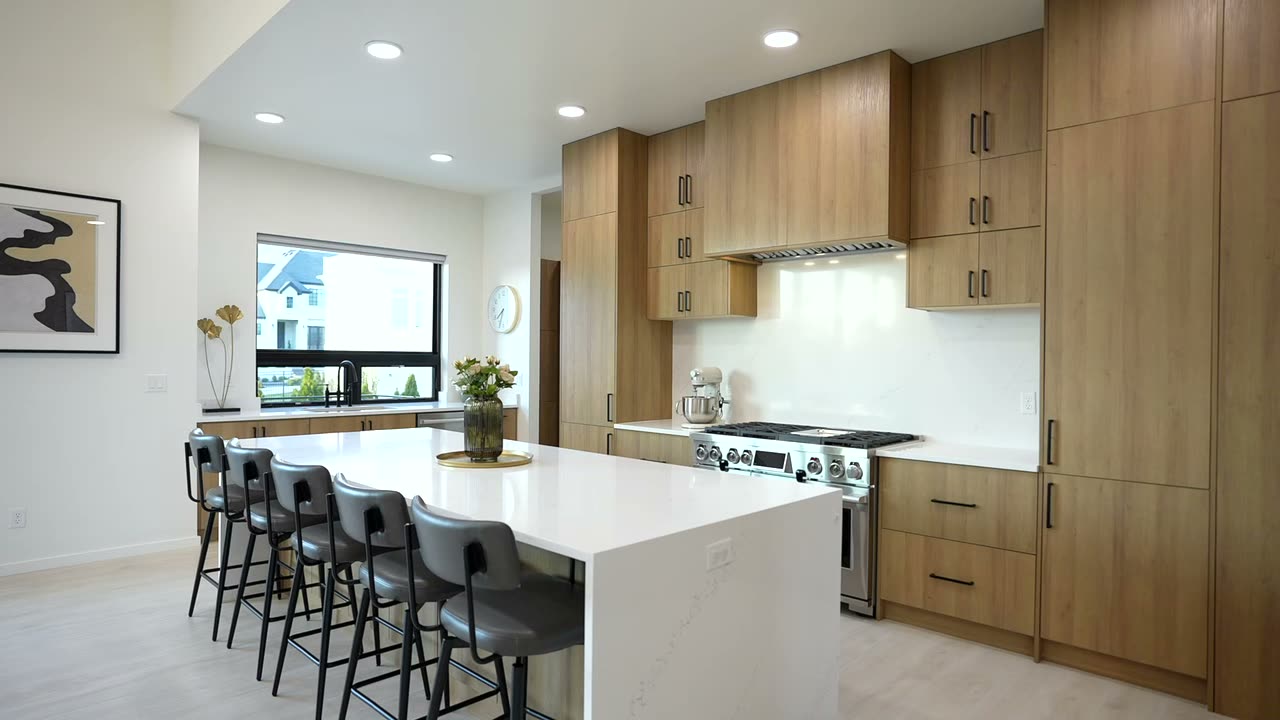
Cabinetry, millwork, tile, stone, flooring, plumbing fixtures, and lighting, with allowances set honestly instead of set low to make a total look better.
Permits, plan review, engineering, testing and inspections, temporary utilities, insurance, and the general conditions of running the job.
Sized to the real risk in this project, and labeled as contingency rather than buried inside line items where it quietly disappears.
Who this is for
You have a design and no idea what it costs. You would rather find out now than after another round of consultant fees.
Three bids, three different totals, and no way to tell whether the low one is efficient or just missing scope. That comparison is a skill, and it is a learnable one only after you have paid for it a few times.
Financing needs a budget that survives scrutiny, with the assumptions stated and the contingency visible.
The design priced high and the reflex is to cut finishes. Often the real money is in structure, spans, and sitework instead.
Recent work

Questions
Related
Feasibility, scope, and planning. The stage that has to happen before a budget has anything solid to price.
Independent plan review, bid evaluation, and oversight, with someone experienced on your side of the table.
Design developed against the budget instead of independently of it, under one contract.
Build-outs, renovations, and expansions where the budget has a lease date attached to it.
Where we work
Drawings, a scope description, or three bids you cannot reconcile. Send what you have and get a straight read on it from Danny.
Or call or text (385) 334-5658